

Meditation, psychotherapy, and compassionate service are often treated as separate paths. Yet, when viewed through a devotional and socially engaged lens, they converge into a single practice aimed at awareness, healing, and social justice.
In December 2025, the illustrious psychotherapist and meditation teacher Kelly Blaser asked me to consider some questions for a live interview. What follows are some of my thoughts in response to her request. You may also listen to our full conversation in the Power of Meditation Summit.
As a devotee of Kuan Yin (Yü, C.-f., 2001) within the lineages of Engaged Buddhism and a practitioner of Bhakti Yoga, I practice at the point where meditation, compassionate service and psychological insight converge to advance social justice.
My thoughts below emerged in response to the question I was asked: Who is speaking within us when we engage in self-talk?
The Inner Dialogue: Awareness, Self-Talk, and Psychological Conditioning
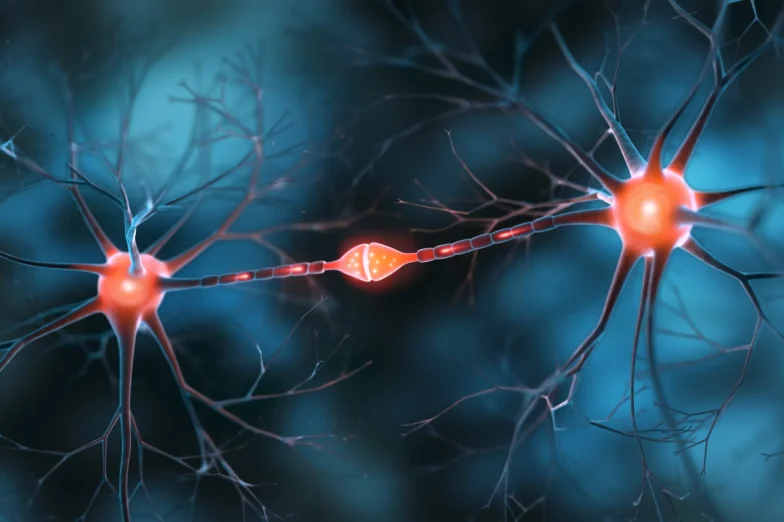
In both contemplative and psychotherapeutic practice, the first step is recognizing who is doing the talking; the operative word is awareness. Much of what we assume to be our inner voice—the self-critic, the commentator, the anxious planner, or the director is, in fact, simply a neuronal recording, an echo of past conditioning.
We often believe this voice is “us,” who we are, our identity, our essence. Still, it is more accurately the residue of experience imprinted in the nervous system, and perhaps a reflection of ancient intergenerational trauma carried in our epigenetic markers, which can turn our genes on or off and influence our emotional and physical well-being. “Getting out of our own way” requires this lens.
This inner dialogue, even when negative, also spurs action. Rather than rejecting this voice, we can learn to relate to it consciously. The goal, whether in therapy or meditation, is not to silence the mind but to transform its habitual patterns through awareness and self-compassion.
Dreaming, Meditation, and Creative States of Consciousness
Dreaming and meditative reverie both open access to creative and integrative states of consciousness. Dream states allow symbolic and neurological processing of emotions that may be repressed or unintegrated. In contemplative practice, we cultivate a similar openness through mindfulness and devotion, creating space for insight, creativity, and healing. The boundary between waking and dreaming becomes a continuum of awareness, revealing how consciousness shapes experience. Dreams can also open a portal to other states of being, where we experience things outside of what we usually consider the regular time-space continuum (Tzioridou et al., 2025).
I was living in the jungle, sleeping under the open sky, surrounded by the moon and the stars. One night, I dreamed that my grandfather Charles, whom I loved deeply, had died. When I awoke, I knew it was true. The next night, I again dreamed about my grandfather, but this time with more detail, and I learned in the dream that he had a heart attack. A few days later, during a 3rd night of dreams, I was flying overhead in his synagogue in Boston during the funeral service, and I saw my family and his friends, in mourning. When I awoke, I knew he had come to me to say goodbye. Three weeks later, I picked up a letter from Don Margarito’s windowsill, sharing all the details revealed in my three dreams.
Kuan Yin, Bhakti Yoga, and Engaged Buddhism: Compassion as Active Practice
Kuan Yin is the female Bodhisattva of Compassion. The Bodhisattva vows to remain in the world until every being is free from suffering. Her name means “She who hears the cries of the world.” Compassion is not passive; it is active and engaged in the world.
Engaged Buddhism emphasizes compassionate action in the world. Our mandate is to respond to suffering not through isolation and solitude but through presence and participation (Zhang and Shi, 2025).
In Bhakti Yoga, devotion and service transform the ego’s grasping nature into a state of love and service. We remind ourselves: “Lose your mind, come to your senses.”
Together, these traditions suggest that inner work and outer service are inseparable. Meditation and activism become two expressions of the same healing Compassion.
A Secular Jewish Commitment: Tikkun Olam
As a secular Jew, a member of the Ashkenazi diaspora, I am deeply committed to Tikkun Olam, the ongoing work of repairing and healing the world. This principle resonates profoundly with both Kuan Yin’s heartfelt Compassion and the Buddhist commitment to alleviating suffering.
Tikkun Olam encompasses social and political repair as well as psychological and spiritual healing. It involves mending the fragmented self and extending that healing outward through service and ethical action.
In this synthesis, devotion, awareness, and social responsibility become one seamless practice (Sperber, 2025).
The Inner Critic, Trauma, and the Myth of Spiritual Peace
A common misunderstanding in spiritual practice is to equate peace with the absence of difficult emotions. In truth, anger, irritation, and grief can coexist with inner stillness when met with awareness rather than suppression. The task is not to eliminate emotion but to express it skillfully and authentically, in balance with mindfulness and Compassion. Many people in trauma recovery pass through a phase where they become stuck between opposing poles. One moment, they are in the grip of rage or addiction; the next, they retreat into strict asceticism and a brittle “everything is fine” stance. But the pain they suppress doesn’t disappear—it moves into the shadow, where it reemerges as projection and moral condemnation of others.
We can see this playing out in the United States, where religious ideologies increasingly shape government actions that stray far from the Golden Rule. These behaviors often reflect unresolved trauma and self-hatred projected outward as hostility and neglect. Occasionally, but not often, something will force them out of this trance state.
Psychotherapy seeks to break through the patterns, whereas most organized religions reinforce the patterns and prevent a personal relationship with awareness and with the divine. This may also be why psychedelics hold so much appeal at this time, when people feel lost and hopeless. Medicine and Shamans alike recognize that psychedelics disrupt the brain’s Default Mode Network, reducing its usual patterns of self-referential thinking and internal narrative.
It is thus no surprise that the use of entheogens (psychedelics) was among the first sacraments banned when representatives of the Catholic Church arrived in Tenochtitlan. Throughout history, organized religions have prohibited these substances, even though many researchers argue that they played a significant role in humanity’s earliest experiences of the divine. Some scholars even propose that the biblical story of Eve was not about an apple at all, but rather a psychedelic mushroom, called Amanita muscaria.
Emotional turbulence, including that pesky inner critic, can, however, serve as a teacher if we use it correctly and are not afraid of it, nor judge it. If we pay attention to that voice, it can keep us awake, humble, and oriented toward awareness and right action. It’s more of a management issue, not a pathology, and we can learn to self-regulate the waves of emotion as we navigate them with grace.
Ego Development, Trauma, and the Paradox of Spiritual Growth
This paradox points to the developmental nature of spiritual growth. A healthy ego provides the structure from which genuine transcendence can arise. The goal is not ego destruction, but ego integration, a conscious relationship with the self that allows openness to something greater, a transpersonal self. (Lamas-Morales,Hijar-Aguinaga& Garcia-Campayo, 2025). Recently, I published a research post on the adverse effects of mediation. While rare, people with unstable ego structures can experience dissociation, which is why meditation, whatever the method chosen, should always be monitored in clients.
Contemplative Wisdom: Knowing When to Be Still and When to Act
Wisdom lies in knowing when to be silent and when to speak, when to rest and when to act. Both meditation and social action require this intuitive balance. The path of Kuan Yin—the path of Compassion—is one of fluid responsiveness rather than rigid ideology or belief. It is about our commitment to act on behalf of others, especially when they cannot for themselves or when they require assistance.
The integration of psychotherapy, Jewish ethics, and Buddhist devotion leads us to the realization that there is no perfect self, but instead to recognize the wholeness already present within awareness, and to let that recognition express itself through compassionate service—through the everyday work of engagement and action.
References
Lamas-Morales, P., Hijar-Aguinaga, R., & Garcia-Campayo, J. (2025). Deconstructive meditations and psychotherapy: Transforming the perception of the self. World journal of psychiatry, 15(6), 107505. https://doi.org/10.5498/wjp.v15.i6.107505
Sperber, D. (2025). “Tikkun Olam”: Helène Aylon’s ecofeminist ritual art. Journal of Aesthetics; Culture, 17(1). https://doi.org/10.1080/20004214.2024.2327660
Yü, C.-f. (2001). Kuan-yin: The Chinese transformation of Avalokitesvara. Columbia University Press. https://doi.org/10.7312/yu–12028
Tzioridou, S., Campillo-Ferrer, T., Cañas-Martín, J., Schlüter, L., Torres-Platas, S. G., Gott, J. A., Soffer-Dudek, N., Stumbrys, T., & Dresler, M. (2025). The clinical neuroscience of lucid dreaming. Neuroscience and biobehavioral reviews, 169, 106011. https://doi.org/10.1016/j.neubiorev.2025.106011

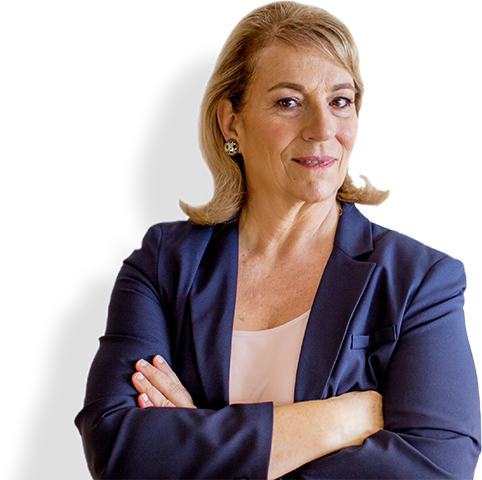
She served as a Fulbright scholar on traditional medicine, a Clinical Fellow at Harvard Medical School, and a National Institutes of Health-funded research scientist in mind/body medicine.
- Culture as Medicine: Why Trauma Must Be Healed in Cultural Context - March 27, 2026
- Integrative Energy Therapies for Trauma and Nervous System Healing - March 16, 2026
- Cooking with Spices and Herbs for Mental Health - March 6, 2026
Are You Ready to Advance Your Career?
If you want to advance your career in integrative medicine, explore my courses and certifications.