
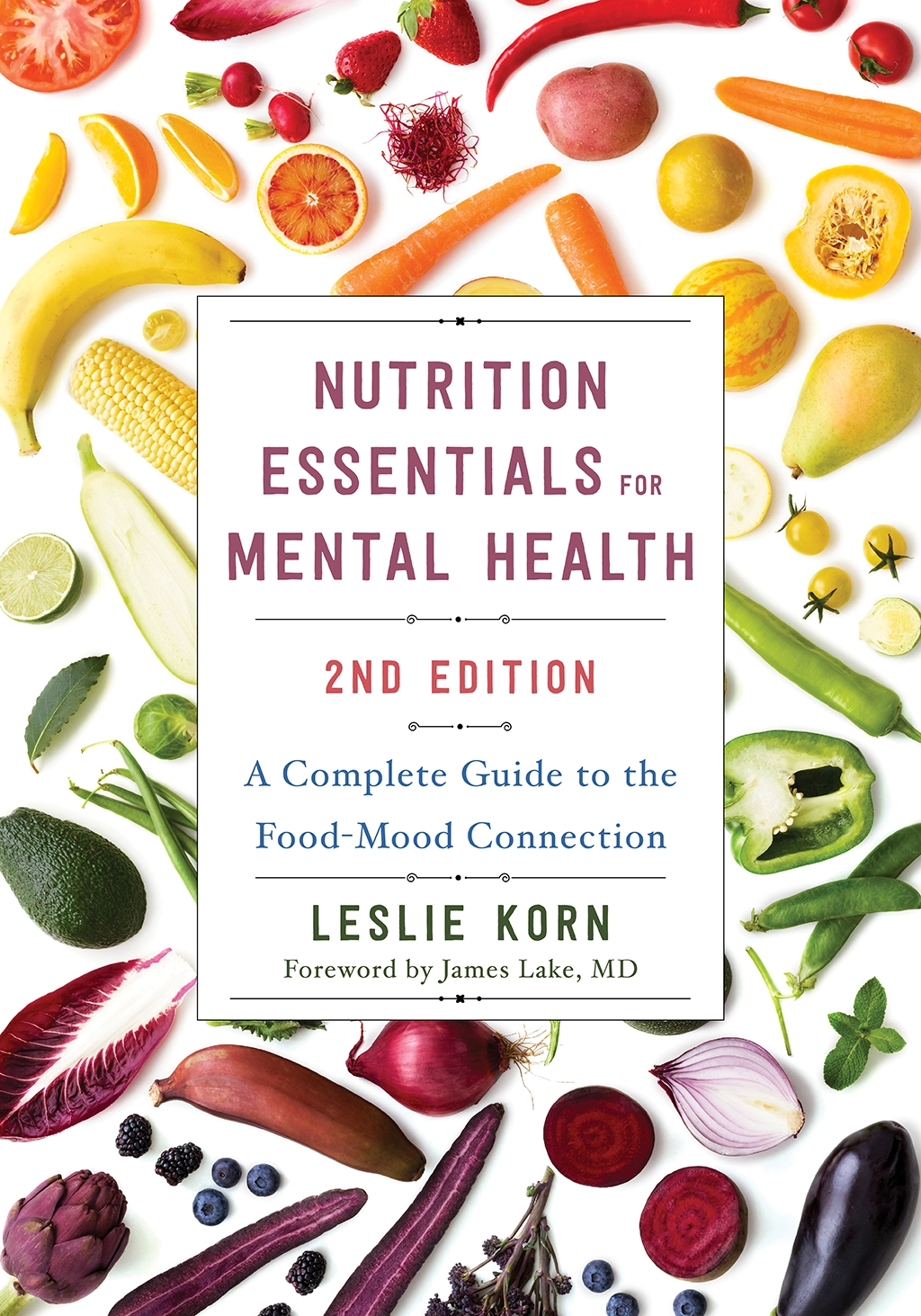
Nutrition Essentials For Mental Health
A Complete Guide To The Food-Mood Connection
2nd Edition
This second edition of Nutrition Essentials for Mental Health expands upon the foundational principles of the original, offering enhanced, practical strategies for integrating nutritional science directly into clinical practice.
Get Your Copy of Nutrition Essentials For Mental Health
12 Things This Book Will Teach You
- Why nutrition matters in mental health
- The role of various nutrients in nourishing both the brain and the gut, the “second brain”
- Typical nutritional culprits that underlie or exacerbate specific mental disorders
- Assessment techniques for evaluating a client’s unique nutritional needs
- Counseling methods for nutritional change
- Leading-edge protocols
- Considerations for food allergies and sensitivities
- The effects of foods and nutrients on DSM-5 categories of illness
- Alternatives to pharmaceuticals for treatment
- Comprehensive, stage-based approaches
- Ideas for practical, affordable, and individualized diets
- Nutritional strategies to help with withdrawal from drugs, alcohol and pharmaceuticals
And much more…
Praise
“Nutrition Essentials for Mental Health is an amazing guide to a deeper understanding of nutrients and food. With a perfect balance of clinical insight and practical guidance, it translates cutting-edge nutrition into everyday choices that are flexible for everyone, providing detailed protocols and action plans. A must-read for clinical professionals as well as anyone seeking to support emotional well-being through the healing power of the plate.
“
Uma Naidoo, MD
Author of Calm Your Mind with Food
“There’s no doubt in my mind that this is the go-to textbook for clinicians wanting to bring awareness to food and its impact on their clients’ mental health.”
Somatic Psychotherapy Today
“Dr. Leslie Korn has a unique combination of expertise in trauma and integrative mental and physical health, yet she synthesizes her vast knowledge and wisdom into warm, down-to-earth, understandable, and practical learning material. Clinicians will be able to easily digest and immediately integrate these concepts into their practice as well as their personal well-being. This book is a must-have on every integrative trauma clinician’s bookshelf!”

Laura Reagan, LCSW-C
Integrative and somatic trauma therapist, host of Therapy Chat and Trauma Chat podcasts, and creator of Trauma Therapist Network
“Dr. Leslie Korn delivers an indispensable guide to the biochemical foundations of mental health. With deep expertise in nutritional psychiatry, she illuminates the critical role of micronutrients, amino acids, and gut health in mood and cognition. This book is a vital resource for clinicians seeking personalized, integrative approaches to healing beyond conventional treatments. A must-read for anyone dedicated to advancing mental health care.”
James Greenblatt, MD
Founder and CEO of Psychiatry Redefined, author of Finally Focused
“In this fully updated second edition, Leslie Korn, PhD, offers mental health professionals a comprehensive, evidence-based roadmap to the powerful role of nutrition in emotional well-being. With clear dietary and health assessment tools, current research, and real-world case studies, this trusted guide addresses psychotropic medication concerns and explores the therapeutic use of herbs and food. It also includes essential guidance on legal considerations for nutrition assessment per state.”

Judith Pentz, MD
Associate professor, Department of Psychiatry and Behavioral Health, University of New Mexico, and author of Cleanse Your Body, Reveal Your Soul
Enjoy Nutrition Essentials For Mental Health On Audiobook
Listen to a Free Audio Sample

Foreword by James Lake, MD
“The doctor of the future will give no medication, but will interest his patients in the care of the human frame, diet and in the cause and prevention of disease.”
—Thomas A. Edison
Nutrition Essentials for Mental Health: The Complete Guide to the Food-Mood Connection, 2nd edition is an authoritative resource on the role of nutrition in mental health. In these pages clinicians will discover many valuable clinical pearls and insights to guide them when advising their patients about practical, safe, effective, and affordable strategic approaches to eating and taking supplements for optimal health and well-being, as well as for preventing and treating common mental health problems.
Almost a decade has passed since Dr. Korn’s book was first published. In this short period significant advances have taken place in our understanding of how nutrition influences mental health and health in general. The 2nd edition has been updated with valuable new material including new research on the role of nutrition for depressed mood, anxiety, and many other mental health problems; the influences of proper nutrition on mitochondrial function; emerging findings on probiotics that enhance wellness (i.e., psychobiotics); all backed up by extensive new references. Dr. Korn has also added several delicious new recipes aimed at optimizing mental health.
Leslie Korn, PhD, MPH, is a clinician specializing in mental health nutrition and integrative medicine. She was a core faculty member of Capella University’s Mental Health Counseling and PhD Programs for 10 years. She served as a Fulbright scholar on traditional herbal medicine, a Clinical Fellow at Harvard Medical School, and a National Institutes of Health-funded research scientist in mind/body medicine.
She is the author of nine books and she works with clients and clinicians to discover just the right diet and foods for personalized mental health.
By examining the relationship between what we eat and how our bodies and brains function, Dr. Korn addresses complex problems of mental health prevention and treatment at the most fundamental level. Various chapters cover the importance of nutritional assessment in mental health care, the best foods and nutrients for mental health, food allergies, sensitivities and special diets, and practical strategies for supporting optimal brain health when weaning off psychotropic medications. Chapter 3 on nutritional assessment should be required reading for all mental health professionals. In this chapter, Dr. Korn provides a template for evaluating each patient’s unique history; identifies pertinent medical, social, and family issues that affect nutrition; and explains how to assess clients for blood sugar handling, food allergies and sensitivities, inflammation, oxidative stress, mitochondrial energy production, and the methylation pathway, all of which play critical roles in health and mental health. As Dr. Korn explains, medical problems and mental illness often occur together; however, causal relationships between specific physical ailments and mental health problems are often difficult to discern. When a mental health problem is addressed with dietary changes that result in optimal nutrition, medical problems often improve. Sound nutrition advice should always comprise a cornerstone of a comprehensive integrative treatment plan. Even in cases where prescription psychotropic medications are a necessary part of treatment, simple changes in nutrition provide important “add-on” benefits to medications by optimizing levels of micronutrients critical for healthy brain functioning.
Dr. Korn offers clear, simple strategies that will guide you in helping clients think about foods that are better suited to their unique biochemical constitutions and mental health needs. The book provides a comprehensive, step-by-step review of the vital links between what we eat, how our brains function—or don’t—and our capacity to think and feel. The book is a tour de force of the complex dynamic relationships that exist between the digestive process, the body, and the brain, beginning with the simple acts of chewing and swallowing and progressing through the complex phases of digestion and elimination. Dr. Korn introduces an important emerging concept in Western medicine called the “human microbiome,” according to which health and mental health are viewed in relation to the microbiome-gut-brain axis (Foster & McVey Neufeld, 2013).
In the face of widespread and often inappropriate prescribing of powerful psychotropic medications, accumulating research evidence supports the use of a range of non-pharmacological approaches for the prevention and treatment of depressed mood, anxiety, dementia, substance abuse, and other common mental health problems. Diet, exercise, and stress management fall under the broad heading of lifestyle changes and, among these, diet is certainly the most important. The relative contributions of diet and other aspects of healthy lifestyle to wellbeing and good physical and mental health cannot be isolated, and are difficult to quantify. Many people who follow healthy diets have generally healthier lifestyles, may be more privileged socioeconomically than individuals who do not have healthy diets, have the leisure to engage in regular exercise, get consistent sleep and practice mindfulness or listen to soothing music (Misuraca et al., 2017). In addition to general beneficial effects of proper nutrition, interventions using specific nutraceuticals can reduce inflammation and oxidative stress, optimize the gut microbiome, and modify neuroplasticity to mitigate mental health problems associated with these physiological dysregulations in the body and brain.
Epidemiological data on relationships between diet and prevalence rates of depressed mood, dementia, and other mental health problems confirm the central role of nutrition in the world’s major healing traditions from earliest historical times. Changes in diet are frequently prescribed as a central part of treatment in Chinese medicine and Ayurveda, on the assumption that without addressing imbalances in the body and mind at a basic level, there may be little hope for changing the factors that manifest as illness. The ancient wisdom of recommending dietary changes for improved health and well-being is reflected in a quote attributed to Hippocrates, the father of Western medicine, who said, “Let food be thy medicine, thy medicine shall be thy food.” Findings of modern research studies strongly support this conventional wisdom. Epidemiological data and findings of controlled studies confirm that diet plays important roles in brain development; signaling networks and neurotransmitters; cognition and memory; mitigating deleterious effects of chronic inflammation; and epigenetic regulation of brain physiology (Ekstrand et al., 2021). The microbiome is essentially an ecosystem of symbiotic bacteria and a host of other microorganisms residing in the healthy gut. Recent studies demonstrate that the microbiome plays a critical role in brain development, behavior, and mental health throughout the lifespan. Bacteria in the microbiome activate neural pathways and central nervous system signaling systems that play a role in mood regulation, memory, and cognition. Research findings show that the gut microbiota are influenced by stress, diet, and a host of other factors in the environment, supporting Dr. Korn’s thesis that interventions based on dietary change and stress management are vitally important for prevention and treatment of common mental health problems.
Almost half of studies on nutrition and mental health published between 1971 and 2014 reported significant positive relationships between diet and depressed mood (Opie et al., 2015). A large population study revealed an alarming correlation between an increased prevalence rate of Alzheimer’s disease in developing countries and multiple lifestyle factors related to increasing globalization such as smoking, alcohol consumption, and the Western diet (i.e., high daily calories consumed and high consumption of animal fat in the diet; Grant, 2014). These results are consistent with the findings of a 36-month prospective trial in which healthy adults who followed a Mediterranean diet experienced a reduced rate of cognitive decline compared to individuals following a Western-style diet with fewer vegetables and high animal fat (Gardener et al., 2014). When working with patients in my private practice I frequently notice a relationship between skipped meals or generally poor nutrition and many common mental health problems such as depressed mood, anxiety, difficulty focusing, and sleep problems. Adding even a quick breakfast to one’s daily routine and following simple guidelines for proper nutrition outlined in this book can sometimes lead to rapid improvement in these problems.
Diet and nutraceuticals influence epigenetic mechanisms starting with fetal development and continuing through the lifespan (Tiffon, 2018). Accumulating research findings support use of dietary change and select nutraceuticals as interventions in individuals diagnosed with depressive mood disorders (Marx et al., 2017). Select nutraceuticals involved in one-carbon metabolism including choline, methionine, folic acid, B-6, and B-12 may play critical roles in activating epigenetic mechanisms during early development that reduce the risk of psychiatric disorders later in life (Bekdash, 2024).
In addition to the increased attention to the role of diet in maintaining optimal mental health, research findings from placebo-controlled studies support the use of high-potency nutraceuticals in the treatment of specific psychiatric disorders. For example, foods rich in B vitamins such as whole grains and leafy green vegetables may be especially beneficial for mood regulation. Some B vitamins are essential cofactors that facilitate synthesis of neurotransmitters centrally involved in mood regulation. Cumulative research findings show that Omega-3 essential fatty acids improve learning, memory, and school performance and enhance cognitive function in individuals with mild forms of cognitive impairment (MCI). Research findings on the relationship between antioxidants and psychiatric disorders are mixed. Some observational studies reveal an association between blood levels of vitamins C, E and carotenoids and reduced risk of Alzheimer’s disease, major depressive disorder, bipolar disorder, schizophrenia, PTSD, and OCD. However other studies report non-significant protective effects of antioxidants. For example, a recent study did not find significant causal associations between circulating levels of diet-derived antioxidants and risk of major psychiatric disorders (Zhao et al., 2023). Reasons for inconsistent findings may include small sample sizes, confounding factors, and differences in study design.
Individuals with mental health problems who may be at risk of a nutritional deficiency because of their dietary preferences should be encouraged to take appropriate doses of vitamins, minerals, or other supplements that are known to be beneficial for their mental health problem. The subspecialty of nutritional psychiatry was recently established to develop an agenda for studies on dietary and nutraceutical interventions for achieving optimal wellness and treating specific mental health problems (Sarris, 2019). A few years ago, the science behind nutrition in mental health care received a significant boost when an international taskforce of 31 leading academics and clinicians from 15 countries published updated guidelines for uses of nutrient-based and plant-based interventions for a wide range of psychiatric disorders (Sarris et al., 2022). The new guidelines were offered as evidence-informed guidance for clinicians to aid them in deciding which supplements are safe and appropriate treatments of major psychiatric disorders. Specific supplements were supported by varying degrees of evidence as adjunctive treatments or monotherapies for certain psychiatric disorders. For example, strong evidence supported adjunctive use of Omega-3 fatty acids and methylfolate in unipolar depression, and strong evidence supported St. John’s wort as a monotherapy for moderate depressed mood.
Optimal nutrition and the strategic uses of supplements should be included as a necessary and central component of integrative treatment addressing depressed mood, anxiety, bipolar disorder, substance abuse, attention-deficit/hyper-activity disorder, schizophrenia, cognitive decline, and dementia. Dr. Korn’s fine book should be required reading for all psychiatrists and psychologists and, more importantly, for medical students and residents in psychiatry, family medicine, internal medicine, and pediatrics, where education on nutrition has been historically lacking.
James Lake, MD is the former chair of the International Network of Integrative Mental Health and the author of several textbooks on integrative mental health, most recently An Integrative Paradigm for Mental Health Care: Ideas and Methods Shaping the Future (Springer, 2019), and a series of 10 self-help books (“Alternative and Integrative Treatments in Mental Health Care” available at https://progressivepsychiatry.com/).
About Leslie Korn
Leslie Korn, PhD, MPH, is a clinician specializing in mental health nutrition and integrative medicine. She was a core faculty member of Capella University’s Mental Health Counseling and PhD Programs for 10 years. She served as a Fulbright scholar on traditional herbal medicine, a Clinical Fellow at Harvard Medical School, and a National Institutes of Health-funded research scientist in mind/body medicine.
She is the author of nine books and she works with clients and clinicians to discover just the right diet and foods for personalized mental health.