

Heavy metals are well-established contributors to mental illness, particularly learning disorders (lead, molybdenum) and cognitive decline (arsenic, mercury, aluminum, lead). With mercury in dental amalgams, air pollution, certain fish, and the widespread use of chemicals in the food supply, it is now nearly impossible to avoid exposure entirely.
The goal, therefore, is not unrealistic elimination, but reducing exposure and supporting the body’s natural detoxification systems. Nutrition plays a central role in both.
Testing hair and blood for heavy metals can help identify toxic burdens, but regardless of testing, everyone benefits from dietary strategies that protect the brain and assist detoxification.
Aluminum: A Common and Overlooked Neurotoxin
Exposure to aluminum occurs at higher rates than any other known metal neurotoxin. Aluminum exposure and elevated levels in brain tissue are correlated with cognitive decline and Alzheimer’s disease (Bhattacharjee et al., 2014; Zhang et al., 2021), largely due to the inflammation and oxidative stress it produces.
Aluminum is found throughout the environment—in air, water, soil, medicines, and food. Although aluminum is naturally present in all foods, additives such as food coloring, preservatives, and leavening agents contribute much larger aluminum compounds. It is also found in processed cheeses, spices, pickles, and baked goods. Drinking water is another common source.
Aluminum is present in antacid medications, cookware, foil, and vaccines. The latter contributes to the majority of aluminum toxicity cases because it is injected directly into the body. Maintaining higher magnesium levels can be protective against aluminum absorption.
Methods to Avoid Aluminum Exposure
- Do not take antacids that contain aluminum hydroxide.
- Avoid using aluminum cookware.
- Do not use aluminum foil.
- Do not use antiperspirant sprays containing aluminum chlorohydrate.
Reducing aluminum exposure is a practical and immediately actionable step in protecting long-term brain health.
Mercury: A Direct Threat to Brain Function
Mercury is a highly toxic metal that easily damages brain tissue and can cause memory loss, ataxia, fatigue, depression, and neurological disturbances.
Most dietary mercury exposure comes from specific seafood and fish products like tuna, which may contain high mercury concentrations. Additional sources include bleaching skin creams, calomel laxatives, cosmetics, hemorrhoid suppositories, photographic supplies, vaccines, and contact lens solutions containing thimerosal. Some multi-dose flu vaccines may still contain thimerosal, and individuals may request vaccines without this additive.
Mercury exposure is cumulative, meaning small exposures over time can eventually reach neurotoxic levels.
Eliminating Heavy Metals With Nutrition
When protein is deficient in the diet, toxic metals such as cadmium, lead, and mercury are more easily absorbed and retained. The sulfur compounds in proteins protect cells from heavy metal toxicity. Sulfur is also essential for methylation, one of the body’s primary detoxification pathways.
Sulfur-rich foods include:
- Animal proteins
- Fish
- Garlic
- Onions
Supplemental niacin also supports liver detoxification.
The cruciferous vegetables—such as cabbage, broccoli, and Brussels sprouts—enhance detoxification enzymes. Sulfur-containing onions and garlic, both raw and cooked, are most beneficial when used daily.
Seaweeds are a powerful detoxifying food source, particularly kelp, which naturally contains sodium alginate. Sea plants rich in sodium alginate bind toxins in the intestinal tract, drawing them out of the body’s tissues. Adding seaweed to soups, bean dishes, or snacks also supports thyroid health.
Alginates from brown seaweeds bind toxic metals in the digestive tract (Eliaz et al., 2007). Capsules combining sodium alginate from brown seaweeds and modified citrus pectin may be used every three months to reduce heavy metal burden.
Coriander—also known as cilantro or Chinese parsley—is a potent antioxidant that has been demonstrated to remove heavy metals from the body. Incorporating cilantro regularly into meals is one of the simplest and most effective detox strategies.
Supporting detoxification through food is gentler, safer, and more sustainable than aggressive chelation protocols for most people.
Cilantro Pesto: A Practical Detox Recipe
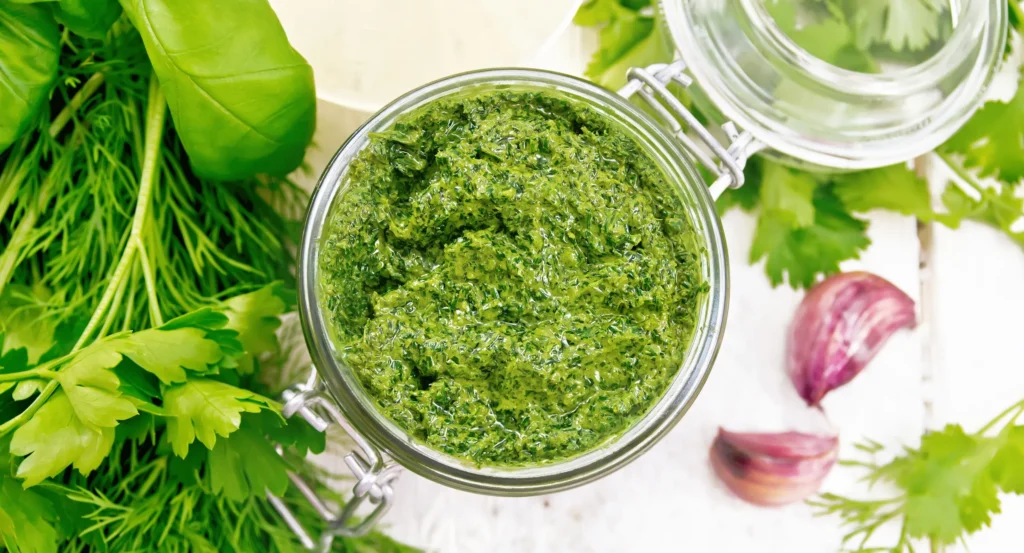
This healthy and delicious pesto can be used on gluten-free pasta or rice or as a dipping sauce for vegetables. Its added benefit is that it chelates (removes) heavy metals from the body. Double the recipe and freeze it in small containers for a quick, nourishing addition to meals.
Makes about 2 cups
Ingredients
- 2 cups firmly packed organic cilantro leaves and stems
- 2 cups firmly packed organic Italian flat-leaf parsley leaves and stems
- ½ cup chopped organic walnuts
- ½ cup organic olive oil
- 1 teaspoon kelp powder
- ¼ teaspoon sea salt
- 2 garlic cloves
Directions
Using a food processor or blender, mix all ingredients until smooth.
This recipe is both therapeutic and delicious, making daily detoxification a practical part of real life.
Eliminating Toxins in the Home
Environmental toxins are linked to a wide range of mental health problems. Exposure is particularly hazardous during pregnancy and early childhood, but exposure at any stage of life is harmful.
Although we cannot eliminate all exposures, we can significantly reduce risk where we have control.
This begins in the home.
Reducing Toxins in Food
To remove pesticides and fertilizers from produce:
- Fill a sink with water.
- Add ½ cup hydrogen peroxide or bleach.
- Soak fruits and vegetables for 5 minutes.
- Wash, rinse, and dry thoroughly.
Replacing Toxic Cleaning Supplies
Look under your sink and in your garage for toxic cleaning products, including drain and oven cleaners. If they were purchased at a grocery store, they are likely toxic.
Throw them out.
Replace them with a mixture of white or apple cider vinegar and water. Vinegar is antibacterial, anti-mold, and antifungal—and far less expensive than commercial cleaners.
If desired, add a few drops of essential oil for fragrance.
This mixture can clean:
- Dishes
- Counters
- Floors
- Toilets
- Tubs
For scrubbing, add baking soda and salt.
Avoid dry cleaning and mothballs. Use essential oils such as cedarwood, lavender, and peppermint instead.
Your home environment is an extension of your nervous system. Reducing toxic load supports both physical and emotional resilience.
Conclusion
Heavy metals are invisible contributors to mood disorders, cognitive decline, and neurological dysfunction. While we cannot avoid exposure entirely, we can dramatically reduce its impact.
By minimizing aluminum and mercury sources, eating sulfur-rich and anti-inflammatory foods, incorporating seaweeds and cilantro, and reducing environmental toxins at home, we support the body’s innate capacity to detoxify. When we nourish the brain and body with the right foods, we not only reduce toxic burden—we create the conditions for mental clarity, emotional stability, and long-term resilience.
This is one more example of how nutrition can become a central part of mental health care—not as an afterthought, but as a foundational tool for healing.
If you would like to go deeper into these topics, explore individualized nutrition, learn more about testing for heavy metals, and access additional therapeutic recipes, I invite you to explore my book, Nutrition Essentials for Mental Health: A Complete Guide to the Food–Mood Connection (2nd Edition), where these principles are developed in greater depth and practical detail.
References
Bhattacharjee, S., Zhao, Y., Hill, J. M., Percy, M. E., & Lukiw, W. J. (2014). Aluminum and its potential contribution to Alzheimer’s disease (AD). Frontiers in Aging Neuroscience, 6, 62.
Bland, J. (1980, July). Glandular based food supplements: Helping to separate fact from fiction, 1979-80. Nutritional Perspectives, 15–39.
Eliaz, I., Weil, E., & Wilk, B. (2007). Integrative medicine and the role of modified citrus pectin/alginates in heavy metal chelation and detoxification: Five case reports. Forschende Komplementärmedizin, 14(6), 358–364.
Zhang, T., He, F., Lin, S., Wang, X., Li, F., Zhai, Y., Gu, X., Wu, M., & Lin, J. (2021). Does aluminum exposure affect cognitive function? A comparative cross-sectional study. PloS One, 16(2), e0246560. https://doi.org/10.1371/journal.pone.0246560

She served as a Fulbright scholar on traditional medicine, a Clinical Fellow at Harvard Medical School, and a National Institutes of Health-funded research scientist in mind/body medicine.
- Culture as Medicine: Why Trauma Must Be Healed in Cultural Context - March 27, 2026
- Integrative Energy Therapies for Trauma and Nervous System Healing - March 16, 2026
- Cooking with Spices and Herbs for Mental Health - March 6, 2026

Are You Ready to Advance Your Career?
If you want to advance your career in integrative medicine, explore my courses and certifications.