
The Symbolism of Figs and the Joy of Summer Salads
Throughout history, figs have carried deep symbolic and nutritional meaning. They appear in ancient texts as symbols of abundance and fertility, and in Buddhist tradition, the Bodhi tree—under which the Buddha reached enlightenment—is a type of fig tree. These fruits, with their honey-like sweetness and velvety texture, remind us that food is both medicine and a source of joy.
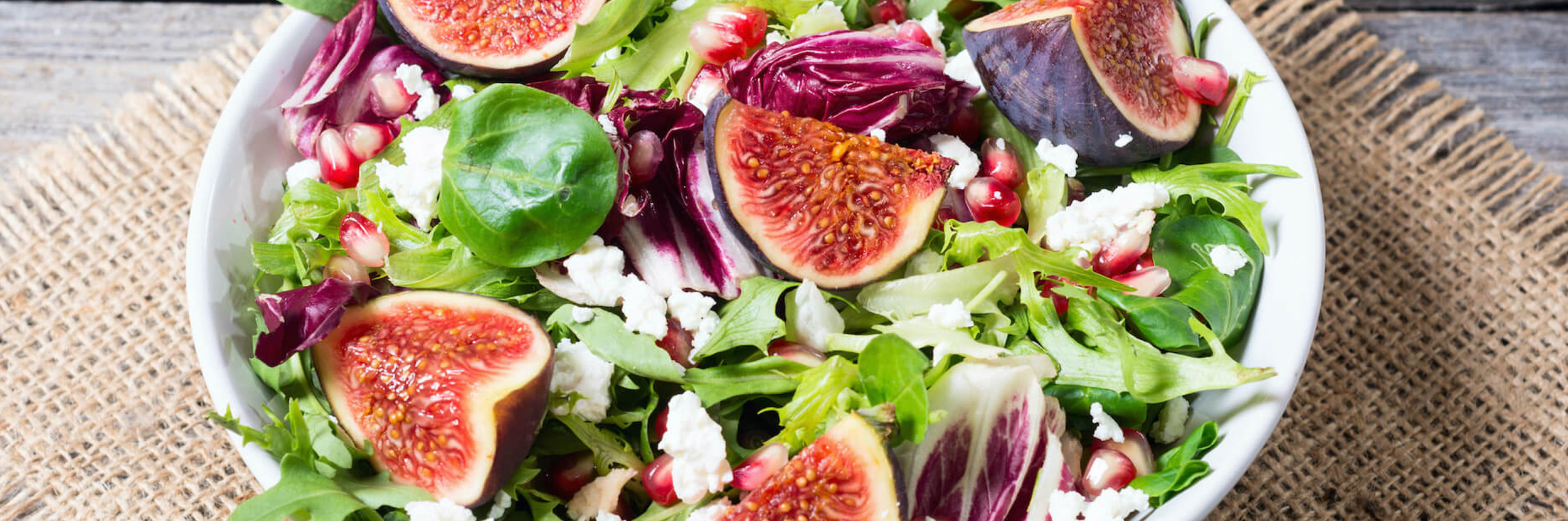
Pairing figs with peppery arugula creates a culinary and sensory contrast: the bitter bite of the greens balances the natural sugars of the fruit. This salad is a celebration of late summer, when figs and peaches are in season, and when our bodies naturally crave lighter, refreshing meals that keep us energized without weighing us down.
Nutritional Benefits of Figs
Figs are much more than a sweet treat. They are rich in antioxidants such as polyphenols, which help protect the body from oxidative stress and inflammation (Sandhu et al. 2023). These compounds are linked to improved heart health and may play a role in protecting against cognitive decline.
Another key nutrient in figs is tryptophan, an amino acid that supports serotonin production. Since serotonin is one of the brain’s main “happiness” neurotransmitters, enjoying figs can contribute to improved mood and emotional balance.
Figs are also a good source of calcium, magnesium, and potassium—minerals that support bone health, regulate muscle function, and help balance blood pressure.
The Healing Properties of Arugula
Arugula, or rocket, belongs to the Brassica family, along with broccoli and kale. Its peppery flavor comes from glucosinolates, phytochemicals that have been studied for their protective effects against certain cancers (Melim et al. 2022).
Nutritionally, arugula provides:
- Vitamin A for vision and immune support
- Vitamin C for collagen production and antioxidant protection
- Vitamin K for blood clotting and bone strength
In traditional food medicine, bitter greens like arugula are valued for stimulating digestion and supporting liver health.
The Sweetness of Peaches
Peaches add juiciness and floral sweetness to this salad. They are rich in vitamin C and beta-carotene, which support skin, eyes, and immune health. Their fiber content aids digestion, while their natural sugars provide quick but balanced energy.
Eating seasonal fruits like peaches also connects us to the cycles of nature, reminding us of abundance and renewal.
Recipe: Arugula Fig Salad
Ingredients:
- 6 ripe figs
- 3 ripe peaches
- ½ bunch arugula
- Fresh parsley sprigs
- Sea salt
- Extra virgin olive oil
- Balsamic vinegar
Directions:
- Wash and dry the greens. Toss lightly with olive oil and sea salt.
- Slice peaches into wedges and halve the figs.
- Heat olive oil in a pan. Place figs cut side down for 10 seconds to caramelize. Remove and cool.
- Top greens with peaches and figs. Add parsley sprigs.
- Drizzle with balsamic vinegar, toss gently, and serve.
How to Make the Salad a Complete Meal
This Arugula Fig Salad can be a light dish or the centerpiece of a meal. Additions such as walnuts, almonds, or pecans bring healthy fats and protein. Thinly sliced Parmesan or Manchego adds richness and calcium, while crisped serrano ham or prosciutto provides a savory contrast.
A drizzle of extra virgin olive oil enhances flavor and supports heart health, while balsamic vinegar awakens the palate and aids digestion.
A Celebration of Food as Medicine
This salad is more than a recipe—it is an invitation to nourish body, mind, and spirit. With figs for mood support, arugula for vitality, and peaches for hydration, this dish brings both delight and healing.
For more recipes that combine science, flavor, and mental wellness, explore my book The Good Mood Kitchen, where you’ll find practical ideas to support your brain, mood, and overall health through food.
References
Sandhu, A. K., Islam, M., Edirisinghe, I., & Burton-Freeman, B. (2023). Phytochemical Composition and Health Benefits of Figs (Fresh and Dried): A Review of Literature from 2000 to 2022. Nutrients, 15(11), 2623. https://doi.org/10.3390/nu15112623
Melim, C., Lauro, M. R., Pires, I. M., Oliveira, P. J., & Cabral, C. (2022). The Role of Glucosinolates from Cruciferous Vegetables (Brassicaceae) in Gastrointestinal Cancers: From Prevention to Therapeutics. Pharmaceutics, 14(1), 190. https://doi.org/10.3390/pharmaceutics14010190

She served as a Fulbright scholar on traditional medicine, a Clinical Fellow at Harvard Medical School, and a National Institutes of Health-funded research scientist in mind/body medicine.
- Culture as Medicine: Why Trauma Must Be Healed in Cultural Context - March 27, 2026
- Integrative Energy Therapies for Trauma and Nervous System Healing - March 16, 2026
- Cooking with Spices and Herbs for Mental Health - March 6, 2026

Are You Ready to Advance Your Career?
If you want to advance your career in integrative medicine, explore my courses and certifications.