 How can I help you?
Ashwagandha (Withania somnifera) is an herb I always want to have on hand. It is one of the most important adaptogens in herbal medicine. Ayurveda has used it for centuries to address chronic stress, fatigue, diminished vitality, and physical and emotional exhaustion. It is one of the few adaptogens that isn’t stimulating and thus can be used at night.
The Sanskrit name ashwagandha means “the smell of a horse,” referring to the distinctive odor of its root and its traditional association with a horse’s strength and endurance.
I use ashwagandha to support myself during stressful periods and before strenuous physical labor. I find it especially useful when I need to prepare for sustained activity and maintain my endurance.
Ashwagandha belongs to the nightshade family (Solanaceae), which also includes tomatoes, potatoes, peppers, and eggplant. People who are sensitive to nightshades should avoid it.
Below, I am providing a recipe from my book, Natural Woman, that you may download for your enjoyment.
Traditional Uses of Ashwagandha in Ayurvedic Medicine
Long before the term adaptogen entered modern herbal medicine (coined by the Russians), Ayurveda classified ashwagandha as a rasayana, a rejuvenating botanical used to nourish the body, restore strength, and promote longevity.
Traditionally, ashwagandha has been used to:
- Improve physical strength, stamina, and endurance.
- Reduce fatigue and support recovery from illness.
- Calm the nervous system and relieve stress.
- Promote restorative sleep
- Improve memory and concentration.
- Enhance libido and reproductive vitality.
- Reduce inflammation and joint discomfort.
- Support healthy aging
Both the roots and berries have been used traditionally, although the root is the principal medicinal part. In Ayurvedic medicine, ashwagandha is frequently combined with other herbs in adaptogenic and general tonic formulas.
The root contains withanolides, a group of naturally occurring steroidal lactones associated with many of the plant’s biological activities. Researchers have studied these compounds for their effects on inflammation, stress physiology, and cellular function.
Ashwagandha also has traditionally been regarded as a mild sedative and aphrodisiac.
Ashwagandha Benefits for Stress and Anxiety
One of ashwagandha’s most important applications is supporting the body’s response to chronic stress. Adaptogens are botanicals that help regulate physiological responses to stress and support resilience during periods of increased physical or psychological demand.
Research suggests that ashwagandha influences the hypothalamic-pituitary-adrenal (HPA) axis, which regulates the body’s stress response. A 2024 systematic review and meta-analysis of nine randomized controlled trials involving 558 participants found that ashwagandha supplementation significantly reduced measures of stress and anxiety. The researchers also reported reductions in serum cortisol, a hormone involved in stress regulation (Arumugam et al., 2024), with the dose used ranging from 240–600 mg daily of standardized extract, generally for 6–8 weeks or longer. I will often recommend a gummy or tincture totaling 600 mg daily.
Ashwagandha Benefits for Sleep and Insomnia
Ashwagandha has long been used to promote relaxation and restorative sleep. Its botanical name, somnifera, means “sleep-inducing.”
Unlike herbs used primarily as sedatives, ashwagandha is traditionally valued for helping restore balance during periods of prolonged stress and exhaustion.
Clinical research has found improvements in several sleep measures, including sleep quality, sleep efficiency, and total sleep time
Ashwagandha for Strength, Stamina, and Physical Performance
Ashwagandha has a reputation as a strengthening herb, traditionally used to improve physical endurance, support recovery from fatigue, and restore vitality following illness or prolonged exertion.
A 2024 randomized, double-blind, placebo-controlled trial found that 600 mg daily of standardized ashwagandha root extract, combined with resistance training over eight weeks, improved muscular strength, muscle size, and cardiorespiratory endurance compared with placebo (Verma et al., 2024).
Research findings support the 600 mg optimal daily dose and align with ashwagandha’s historical use as a restorative tonic.
Ashwagandha for Memory, Mood, and Cognitive Function
Ashwagandha has traditionally been used to improve memory, concentration, and emotional stability. Research has investigated its effects on attention, memory, executive function, and mood. Some small clinical studies have reported improvements in cognitive performance.
Its effects on stress regulation and sleep may contribute to some of the cognitive and emotional benefits reported in clinical studies.
Ashwagandha for Inflammation and Joint Health
Ashwagandha has traditionally been used to reduce swelling, inflammation, and discomfort associated with painful joints. Withanolides have shown anti-inflammatory activity in laboratory and preclinical research. In traditional practice, powdered ashwagandha root has also been applied topically to swelling, boils, and arthritic joints, although clinical evidence for these topical applications is limited.
Ashwagandha Dosage: How Much Should You Take?
The right amount of ashwagandha depends on whether you take it as whole-root powder or a concentrated extract. I always cycle on and off Ashwagandha. Use it for up to 12 weeks and then choose another adaptogen or herbal intervention. For example, since it helps HPA axis and is helpful for sleep I might then switch to Licorice root in the morning only as a balance to continue stress reduction support.
| Purpose | Dosage studied | Duration |
| Stress and anxiety | 240–600 mg/day extract | 6–8+ weeks |
| Sleep | 120–600 mg/day extract | 6–12 weeks |
| Physical performance | 300–600 mg/day extract | 8–12 weeks |
These are research dosages, not individualized prescriptions. However, you will find good quality beneficial between 300-600 mg daily depending on age, body weight, and indication.
Traditional whole-root powder and concentrated extracts are not interchangeable. Standardized extracts may contain substantially different concentrations of withanolides, so preparation matters as much as the milligram amount. Ask about withanolides content in the preparation.
Culinary and Topical Uses of Ashwagandha Root
One advantage of powdered ashwagandha root is that you can incorporate it into food.
Traditionally, people have mixed the powder with milk, ghee, honey, and other nourishing ingredients. You can also add it to recipes, including my Ashwagandha Power Balls, for a convenient way to use the powdered root.
The powder has also been used externally in traditional herbal preparations for localized swelling and joint discomfort.
Is Ashwagandha Safe? Side Effects and Contraindications
Ashwagandha is generally well tolerated in short-term clinical studies, but it is a pharmacologically active herb and is not appropriate for everyone. Reported adverse effects include gastrointestinal discomfort, nausea, diarrhea, and drowsiness. Rare cases of liver injury associated with ashwagandha-containing supplements have also been documented. If I am working with someone with a history of alcohol and drug abuse or impaired liver function, I avoid Ashwagandha to be on the safe side.
A 2026 scoping review identified 25 patients across 13 publications describing ashwagandha-associated liver injury. Most recovered following discontinuation, although severe outcomes were reported, particularly among patients with pre-existing liver disease (McIntyre et al., 2026).
Particular considerations include:
- Nightshade sensitivity: Ashwagandha belongs to the Solanaceae family and should be avoided by people with known adverse reactions to the herb or its constituents.
- Thyroid function: Ashwagandha may increase thyroid hormone concentrations and can interact with thyroid medications.
- Pregnancy and breastfeeding: Avoid ashwagandha during pregnancy, and safety information during breastfeeding is limited.
- Sedative medications: Ashwagandha may increase sedative effects when combined with certain medications.
- Autoimmune conditions and immunosuppressants: Potential immunological effects warrant caution.
- Liver disease: Rare reports of liver injury warrant particular attention in people with existing liver conditions (McIntyre et al., 2026).
Choosing an Ashwagandha Supplement or Root Powder
The most important considerations when choosing an ashwagandha product are the plant part used, the extraction method, the concentration of withanolides, and manufacturing quality.
Traditional preparations generally emphasize the root, while some contemporary products combine root and leaf extracts.
A 300-mg dose of one standardized extract may differ substantially from the same quantity of another preparation.
My favorite, reliable herbal medicine companies include HerbPharm, Gaia Herbs, Wise Women Herbals and Standard Process
Conclusion: Ashwagandha, A Modern Herb with Ancient Roots
Ashwagandha has been valued for centuries as a restorative herb for strength, endurance, resilience, sleep, and vitality.Modern clinical research increasingly supports several of these traditional applications, particularly its effects on stress, anxiety, sleep, and physical performance (Arumugam et al., 2024; Verma et al., 2024).
Other traditional uses, including cognitive support, reproductive health, inflammation, and recovery from exhaustion.
For me, ashwagandha remains an important herb to keep available, particularly during periods of sustained stress, physical demands, and fatigue.
References
Arumugam, V., Vijayakumar, V., Balakrishnan, A., Bhandari, R. B., Boopalan, D., Ponnurangam, R., Thirupathy, V. S., & Kuppusamy, M. (2024). Effects of Ashwagandha (Withania somnifera) on stress and anxiety: A systematic review and meta-analysis. Explore, 20(6), 103062. https://doi.org/10.1016/j.explore.2024.103062
McIntyre, D., Nguyen, P., Kim, Y., Meyer, B., & Salloum, M. (2026). Ashwagandha (Withania somnifera)-associated liver injury: A scoping review of clinical characteristics and safety considerations. Cureus, 18(5), e109764. https://doi.org/10.7759/cureus.109764
Verma, N., Gupta, S. K., Patil, S., Tiwari, S., & Mishra, A. K. (2024). Effects of Ashwagandha (Withania somnifera) standardized root extract on physical endurance and VO₂max in healthy adults performing resistance training: An eight-week, prospective, randomized, double-blind, placebo-controlled study. F1000Research, 12, 335. https://doi.org/10.12688/f1000research.130932.2
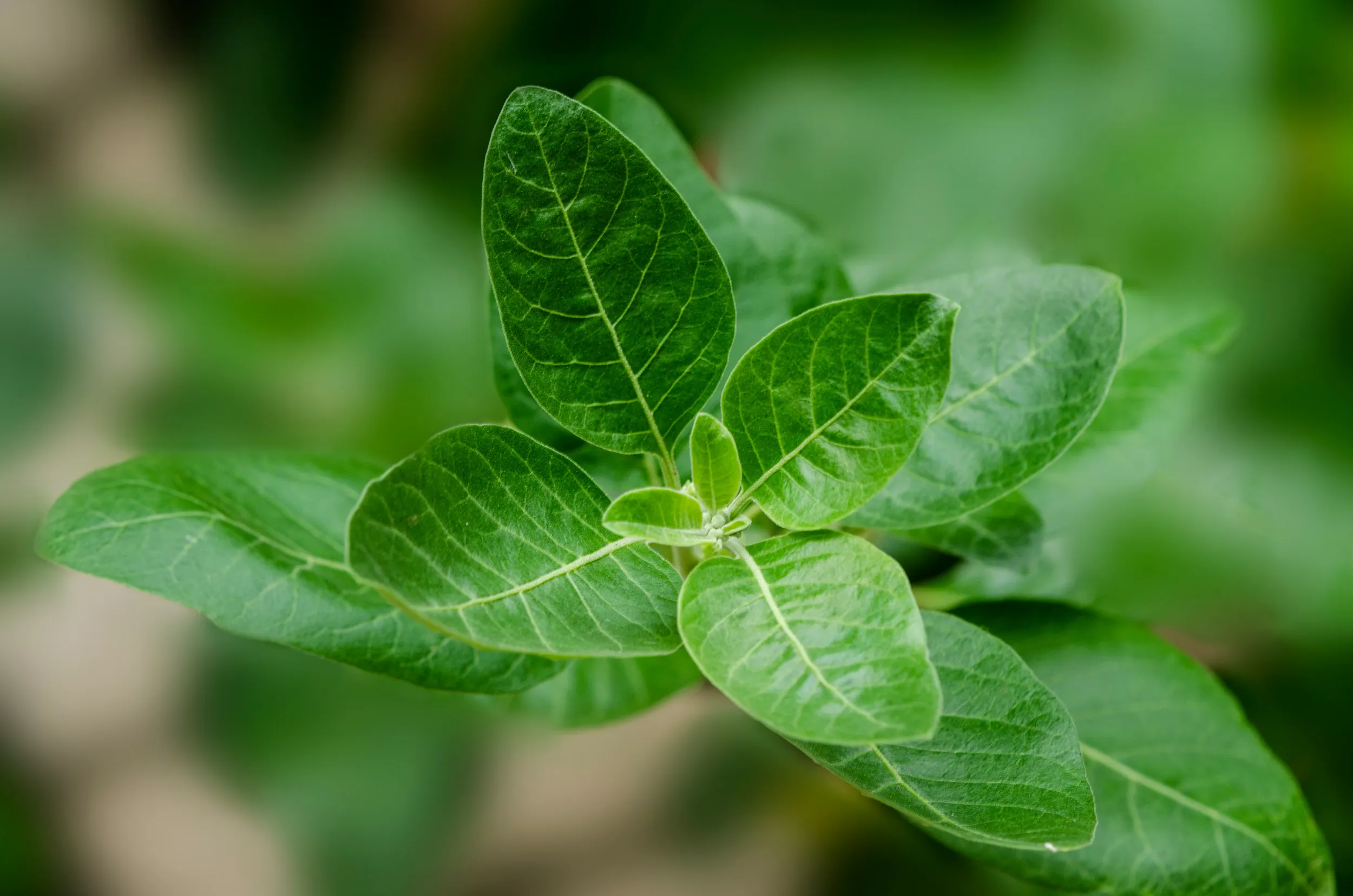
Header image: Bankim Desai on Unsplash

She served as a Fulbright scholar on traditional medicine, a Clinical Fellow at Harvard Medical School, and a National Institutes of Health-funded research scientist in mind/body medicine.
- Ashwagandha: Traditional Uses, Health Benefits, Dosage, and Safety - November 9, 2026
- Understanding Cannabis Ratios and Delivery Methods - October 28, 2026
- The Humble Cabbage: Good Nutrition for Less Than $3 a Serving - October 21, 2026

Are You Ready to Advance Your Career?
If you want to advance your career in integrative medicine, explore my courses and certifications.