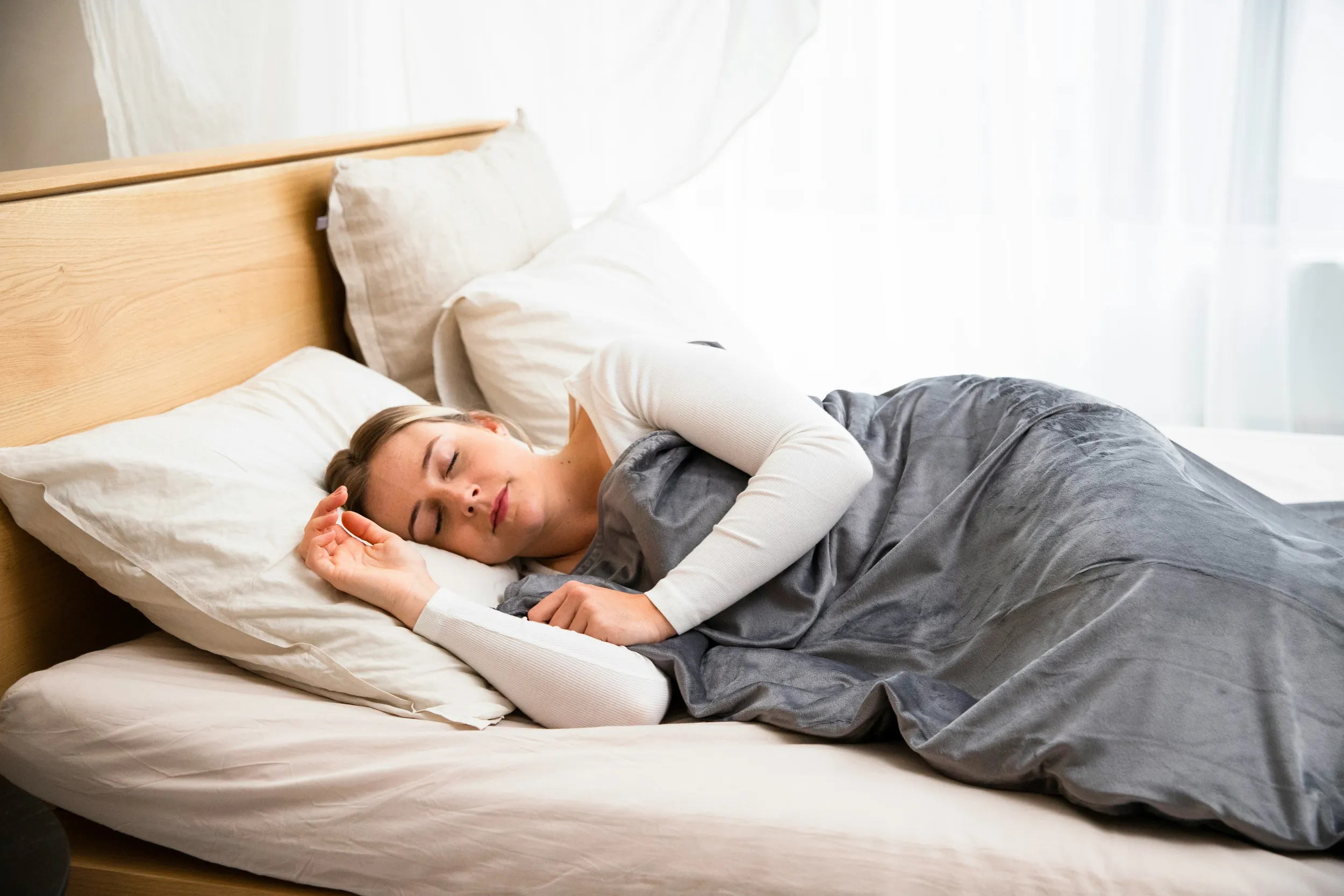
Stress-related sleep disturbance frequently reflects persistent physiological activation across the autonomic nervous system, central arousal networks, and the hypothalamic-pituitary-adrenal (HPA) axis. Cognitive activity may persist into the evening, autonomic arousal may remain elevated, and the transition from wakefulness into stable sleep may be delayed or fragmented.
The autonomic nervous system is central to this process. Sympathetic activation supports vigilance, cardiovascular mobilization, glucose availability, and rapid response to demand. Parasympathetic activity contributes to digestion, cardiac slowing, restoration, and the physiological conditions associated with sleep.
These systems operate dynamically across the 24-hour cycle rather than as simple opposites, and healthy regulation depends on the ability to move between activation and recovery in response to changing internal and external demands.
Two nutritional ingredients I have used in this context are Lactium®, a standardized bovine alpha-S1 casein hydrolysate, and PeptiSleep™, a brown-rice-derived bioactive peptide ingredient produced from rice protein hydrolysate and used in Sleep Tides.
I have used these approaches with clients for more than 25 years and use them personally during periods of significant stress. In my experience, they are gentle and effective adjuncts when stress, autonomic hyperarousal, and disturbed sleep occur together.
Stress, Sleep, and the Autonomic Nervous System
The autonomic nervous system (ANS) regulates cardiovascular function, respiration, gastrointestinal activity, thermoregulation, pupillary responses, and numerous other processes that operate largely outside conscious control. Its sympathetic and parasympathetic divisions continually modulate physiological state according to posture, physical activity, emotional demand, meals, illness, circadian timing, and sleep-wake state.
Sympathetic activity supports mobilization during physical or psychological demand; parasympathetic pathways support restoration, digestion, cardiac deceleration, and recovery. The relevant clinical issue is not sympathetic activation itself, which is adaptive and necessary, but its persistence when environmental or internal demands have diminished.
Chronic stress, trauma, pain, sleep deprivation, hormonal transitions, illness, undernutrition, irregular schedules, and sustained psychological demand can alter autonomic regulation. In some individuals, this contributes to a state of hyperarousal in which physiological and cognitive activation persists into the evening and disrupts sleep initiation or continuity.
Sleep itself is an actively regulated neurophysiological state involving circadian timing, homeostatic sleep pressure, autonomic modulation, endocrine signaling, temperature regulation, and coordinated changes in central nervous system activity. Disturbance in one domain can reinforce disturbance in another: hyperarousal interferes with sleep, while insufficient or fragmented sleep can increase autonomic and neuroendocrine reactivity the following day.
Cortisol, the HPA Axis, and Sleep
Cortisol is an essential glucocorticoid produced by the adrenal cortex under the regulation of the HPA axis. It participates in glucose metabolism, vascular regulation, immune signaling, memory, alertness, and adaptation to physiological and psychological demand.
Cortisol secretion follows a marked circadian rhythm. Concentrations generally begin to rise during the latter part of the night, increase around awakening, and decline across the day toward lower evening levels. Superimposed upon this diurnal pattern are pulsatile secretory dynamics and acute responses to physical, psychological, metabolic, and inflammatory stimuli.
The HPA axis and sleep influence one another bidirectionally. Sleep disruption can alter neuroendocrine stress responsiveness, while increased HPA-axis activation can interfere with sleep initiation and continuity (Buckley & Schatzberg, 2005; Meerlo et al., 2008).
Clinically, the relevant variables include timing, diurnal slope, evening cortisol, the cortisol awakening response, and the relationship between measured output and the individual’s symptoms. A single value designated as “high” or “low” provides far less information than the temporal pattern in which that value occurs.
Lactium: A Casein-Derived Bioactive Peptide Preparation
Lactium is a standardized hydrolysate derived from bovine alpha-S1 casein, one of the principal proteins in cow’s milk. Enzymatic hydrolysis cleaves the parent protein into smaller peptide fragments, some of which have biological activity distinct from the nutritional function of the intact protein. One peptide associated with alpha-S1 casein is alpha-casozepine, which has been investigated in relation to stress and anxiety-related physiology.
Preclinical research has identified interactions with inhibitory neurotransmitter pathways, including GABA-related signaling. GABA, or gamma-aminobutyric acid, is the principal inhibitory neurotransmitter in the central nervous system and plays a central role in regulating neuronal excitability.
The relevance of these peptide effects is not pharmacological equivalence to a benzodiazepine or conventional hypnotic. Rather, Lactium has been studied in relation to stress responsiveness, arousal, and sleep-related outcomes.
Human Research on Lactium and Stress
Messaoudi and colleagues examined healthy adults exposed to successive mental and physical stressors. Participants receiving an alpha-S1 casein tryptic hydrolysate demonstrated differences in several psychological and physiological responses to stress compared with placebo (Messaoudi et al., 2005). This finding is consistent with a model of stress regulation in which the clinically relevant variable is not eliminating the stress response, but modulating its intensity and persistence.
Clinically, I use Lactium when the dominant pattern is excessive or prolonged activation. I sometimes describe this to clients as lowering the volume rather than eliminating the signal: the stress response remains available, but it becomes less intrusive and less likely to dominate the transition into evening and sleep.
Lactium and Sleep
A later human study evaluated alpha-S1 casein tryptic hydrolysate in adults reporting sleep difficulties and found improvement in several subjective measures of sleep (de Saint-Hilaire et al., 2009).
Clinically relevant outcomes include sleep initiation, nighttime awakenings, ability to return to sleep, perceived sleep quality, and morning restoration. These outcomes reflect the lived effects of sleep disturbance even when they do not directly characterize sleep architecture.
Insomnia, however, is heterogeneous. Difficulties with sleep initiation, sleep maintenance, early waking, and nonrestorative sleep may arise from different combinations of autonomic hyperarousal, mood disorders, trauma-related physiology, circadian disruption, pain, medication effects, endocrine changes, sleep-disordered breathing, restless legs syndrome, and other conditions.
In practice, I most often begin with Lactium when the presentation includes stress, tension, autonomic hyperarousal, and difficulty transitioning from daytime activation into sleep. Depending on the individual and the clinical pattern, I may also use Lavela or VHP and add other nutrients sequentially rather than introducing multiple interventions simultaneously.
PeptiSleep™: Brown-Rice-Derived Bioactive Plant Peptides
The Oryza sativa component used in Sleep Tides is PeptiSleep™, a brown-rice-derived bioactive peptide ingredient produced from rice protein hydrolysate.
Bioactive peptides are short amino-acid sequences released from larger proteins through enzymatic hydrolysis, fermentation, or digestion. Their physiological activity depends on the specific amino-acid sequences generated, molecular size, degree of hydrolysis, and characteristics of the finished peptide fraction. This creates an important biochemical parallel between Lactium and PeptiSleep.
Lactium is a bovine milk-protein hydrolysate derived from alpha-S1 casein. PeptiSleep is a brown-rice-protein hydrolysate.
In both cases, the relevant biological material is not the intact food protein alone, but the peptide profile produced through controlled hydrolysis.
Why Peptide Structure Matters
Protein hydrolysates are not interchangeable. Their biological characteristics depend on the source protein, the enzymes used for hydrolysis, the degree of hydrolysis, the peptide sequences generated, molecular-weight distribution, purification and standardization, and the concentration delivered in the finished formulation. These variables determine which peptides are present and therefore what biological activity is possible.
Combining Lactium and PeptiSleep
Lactium and PeptiSleep provide two distinct sources of bioactive peptides. In Sleep Tides, they are used together for stress-related sleep disturbance and autonomic hyperarousal.
The clinical pattern may include persistent cognitive or physiological activation in the evening, difficulty initiating sleep, fragmented sleep, early waking, inadequate restoration despite sufficient time in bed, and increased stress reactivity following poor sleep.
This pattern is physiologically coherent. Sleep disruption can increase next-day autonomic and HPA-axis reactivity, while persistent autonomic activation can impair subsequent sleep. Over time, the reciprocal effects of hyperarousal and sleep loss can reinforce one another.
For this reason, I often address stress physiology and sleep together rather than treating them as independent problems.
My Clinical Experience
I have used these nutritional strategies for more than 25 years and use them personally during periods of increased stress.
I find them particularly useful when the clinical presentation includes sustained physiological activation, difficulty settling at night, disrupted sleep continuity, and increased reactivity during periods of psychological or physical stress.
The changes I monitor include:
- evening hyperarousal;
- sleep-onset latency;
- nighttime awakenings;
- ability to return to sleep;
- morning restoration;
- intensity and duration of stress reactivity;
- recovery following stressful events.
These functional changes are often more clinically informative than overt sedation.
Where 24-Hour Salivary Cortisol and DHEA Testing Fits
Some clients benefit from additional assessment of diurnal cortisol rhythm.
A multi-sample (4) salivary cortisol profile measures free cortisol at several points across the day. Depending on the collection protocol, it can characterize morning cortisol concentrations, the cortisol awakening response, daytime decline, evening cortisol, and the overall diurnal slope.
I use panels that also measure DHEA, an adrenal steroid precursor involved in steroid hormone synthesis. DHEA provides additional information about adrenal steroid output but follows biological patterns distinct from cortisol, including substantial variation by age, sex, endocrine status, and time of sampling.
A multi-point salivary profile can show whether cortisol concentrations are relatively elevated or attenuated at specific times, whether the expected morning-to-evening decline is present, whether the diurnal curve appears flattened, whether evening cortisol remains relatively elevated, and how cortisol output varies across the sampled day.
It does not directly measure autonomic nervous system function or determine the cause of stress-related symptoms. A commercial multi-point salivary cortisol and DHEA profile also does not, by itself, diagnose the cause of insomnia, fatigue, or anxiety; establish a diagnosis of “adrenal fatigue”; diagnose adrenal insufficiency or Cushing syndrome; or replace endocrine evaluation when an adrenal disorder is suspected.
Cortisol measurements are influenced by awakening time, acute stress, exercise, illness, medications, caffeine, nicotine, sleep deprivation, and adherence to collection timing (Adam & Kumari, 2009; Hellhammer et al., 2009).
Safety: Lactium, Casein Sensitivity, and Milk-Protein Allergy
Because Lactium is derived from bovine alpha-S1 casein, its use requires consideration in people who react to cow’s-milk protein.
A cow’s-milk protein allergy, including IgE-mediated casein allergy, is distinct from lactose intolerance. Lactose intolerance reflects impaired digestion of the milk sugar lactose. Lactium is derived from milk protein, so the relevant issue is reactivity to casein-derived peptides.
Hydrolysis breaks intact casein into smaller peptide fragments and may alter antigenicity, but it does not necessarily eliminate immunologic reactivity. Degree of hydrolysis, residual peptide composition, manufacturing methods, and individual immune responses all influence tolerability.
A hydrolyzed casein preparation should not automatically be assumed to be hypoallergenic. Individuals with a known cow’s-milk protein or casein allergy should avoid Lactium unless specifically cleared by an allergist or physician.
The term casein intolerance is less specific and may refer to non-IgE-mediated milk-protein reactions, reproducible gastrointestinal or systemic symptoms associated with casein-containing foods, or self-identified sensitivity.
Some people who do not tolerate intact casein may tolerate a hydrolyzed casein preparation; others may not. Lactose intolerance does not necessarily predict a reaction to Lactium.
PeptiSleep Safety
PeptiSleep is derived from brown rice protein. Rice allergy is uncommon but does occur, and hydrolysis does not guarantee elimination of allergenic peptide fragments. Individuals with a known rice allergy should avoid rice-protein hydrolysates unless cleared by an allergist or physician.
In people without rice allergy, rice protein hydrolysates are generally well tolerated. New gastrointestinal, cutaneous, respiratory, or other unexpected symptoms after beginning a product warrant discontinuation and reassessment.
Pregnancy, breastfeeding, significant medical conditions, and concurrent use of medications affecting sleep, mood, blood pressure, endocrine function, or the central nervous system warrant review with a licensed clinician or pharmacist.
Persistent insomnia also requires assessment for common medical and psychiatric contributors, including sleep apnea, restless legs syndrome, chronic pain, thyroid dysfunction, mood disorders, trauma-related hyperarousal, perimenopause and menopause, medication effects, substance use, and circadian rhythm disorders.
Conclusion
Lactium and PeptiSleep are bioactive peptide preparations derived from different food proteins. Lactium is produced from bovine alpha-S1 casein; PeptiSleep is produced from brown rice protein. In both cases, enzymatic hydrolysis generates peptide fractions with biological characteristics distinct from those of the intact source protein.
Lactium has been studied in humans in relation to stress responsiveness and sleep-related outcomes. PeptiSleep is a rice protein hydrolysate and is biochemically distinct from other Oryza sativa-derived constituents such as gamma-oryzanol, rice bran oil, or GABA-enriched rice.
I have used these methods clinically for more than 25 years and use them personally during periods of increased stress. They are particularly useful in my practice when clients experience autonomic hyperarousal, difficulty settling in the evening, and disturbed sleep occurring together.
Within an integrative model of stress physiology, the relevant clinical terrain includes autonomic regulation, HPA-axis activity, circadian organization, sleep continuity, medical contributors, medication effects, and the individual pattern of recovery following stress.
References
Adam, E. K., & Kumari, M. (2009). Assessing salivary cortisol in large-scale, epidemiological research. Psychoneuroendocrinology, 34(10), 1423–1436. https://doi.org/10.1016/j.psyneuen.2009.06.011
Buckley, T. M., & Schatzberg, A. F. (2005). On the interactions of the hypothalamic-pituitary-adrenal (HPA) axis and sleep: Normal HPA axis activity and circadian rhythm, exemplary sleep disorders. The Journal of Clinical Psychiatry, 66(Suppl. 9), 28–40. 10.1210/jc.2004-1056
de Saint-Hilaire, Z., Messaoudi, M., Desor, D., & Kobayashi, T. (2009). Effects of a bovine alpha-S1 casein tryptic hydrolysate on sleep disorder in Japanese general population. The Open Sleep Journal, 2, 26–32. https://doi.org/10.2174/1874620900902010026
Hellhammer, D. H., Wüst, S., & Kudielka, B. M. (2009). Salivary cortisol as a biomarker in stress research. Psychoneuroendocrinology, 34(2), 163–171. https://doi.org/10.1016/j.psyneuen.2008.10.026
Meerlo, P., Sgoifo, A., & Suchecki, D. (2008). Restricted and disrupted sleep: Effects on autonomic function, neuroendocrine stress systems and stress responsivity. Sleep Medicine Reviews, 12(3), 197–210. https://doi.org/10.1016/j.smrv.2007.07.007
Messaoudi, M., Lefranc-Millot, C., Desor, D., Demagny, B., & Bourdon, L. (2005). Effects of a tryptic hydrolysate from bovine milk alpha-S1 casein on hemodynamic responses in healthy human volunteers facing successive mental and physical stress situations. European Journal of Nutrition, 44(2), 128–132. https://doi.org/10.1007/s00394-004-0514-0

She served as a Fulbright scholar on traditional medicine, a Clinical Fellow at Harvard Medical School, and a National Institutes of Health-funded research scientist in mind/body medicine.
- The Humble Cabbage: Good Nutrition for Less Than $3 a Serving - October 21, 2026
- Eating for Mental Health on a Budget: Delicious, Nutritious Foods That Don’t Break the Bank - October 14, 2026
- Types of Magnesium: How to Choose the Right Form - September 28, 2026

Are You Ready to Advance Your Career?
If you want to advance your career in integrative medicine, explore my courses and certifications.