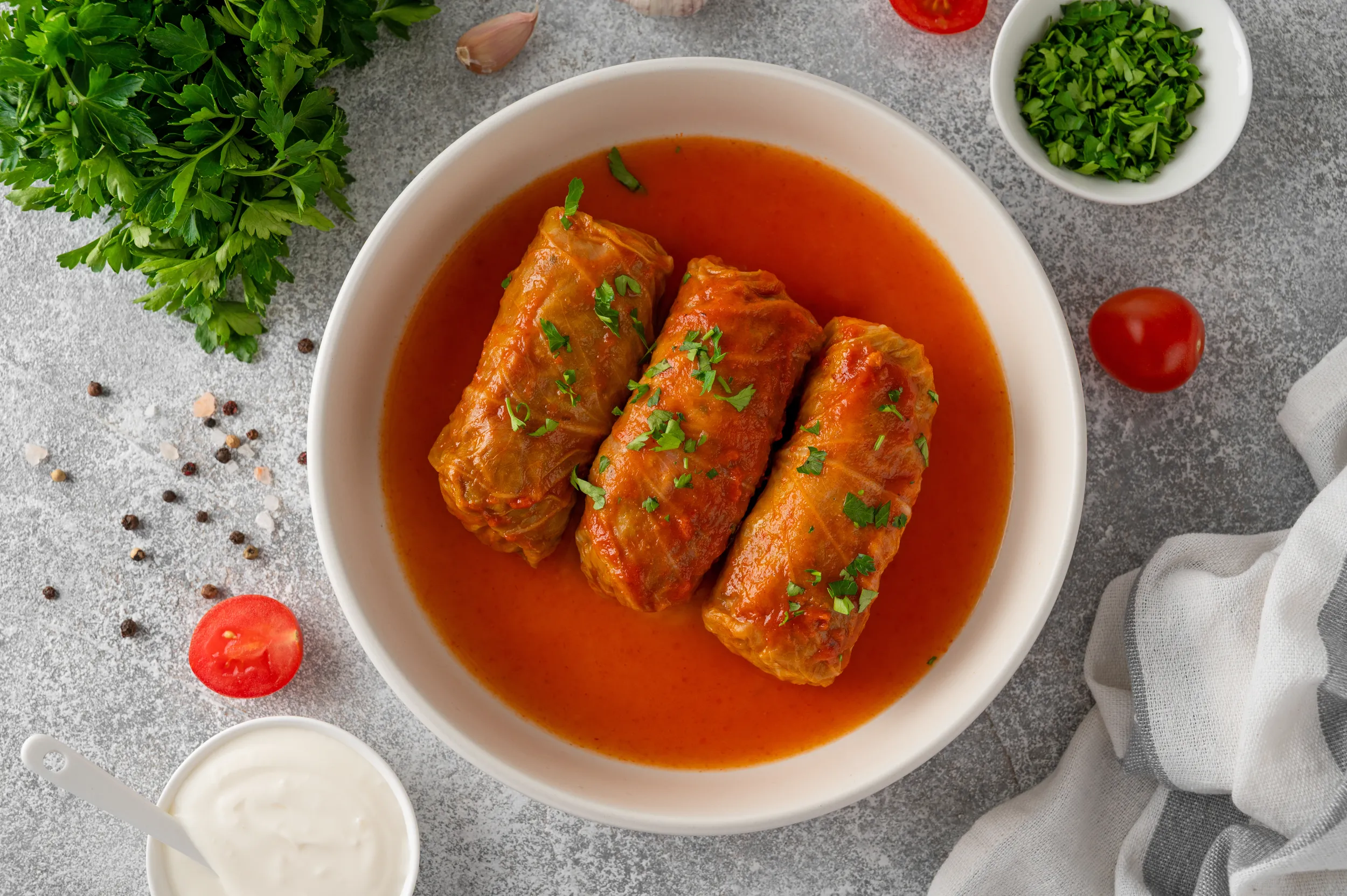
Stuffed Cabbage Rolls with Pine Nuts, Raisins, Rice, and Tomato Sauce
We often overlook the workhorse vegetable called cabbage. Still, it has remarkable flavor and nutritional value, and it’s an inexpensive source of cruciferous sulforaphane, which has been shown to support detoxification and mental health. If you are vegetarian, omit the animal protein and add chopped portobello mushroom or chickpeas.
If you use beef, the meal costs $16.00. Depending on your choice and substitutions, each serving runs $1.84–$2.70 depending on the protein and seed choices.
This traditional Mediterranean-inspired dish combines tender cabbage leaves with a savory-sweet filling of ground beef, rice, toasted pine nuts, raisins, onions, and herbs, all simmered in a rich tomato sauce. A small amount of meat goes a long way, making this an economical, nutrient-dense meal that provides protein, fiber, minerals, and a variety of phytochemicals.
Make It a Family and Friends Affair
Stuffed cabbage rolls are a wonderful dish to make together with family and friends. Set aside a weekend afternoon, gather around the kitchen table, and turn the preparation into a shared activity. One person can prepare the cabbage leaves, another can mix the filling, and everyone can help roll and stuff the cabbage. Make a big batch, enjoy a meal together, and divide the extras to take home or freeze for another day.
Cooking together offers benefits beyond nutrition. It creates opportunities for conversation, connection, laughter, and the sharing of family traditions. These social experiences can support emotional well-being and help make healthy eating a pleasurable part of everyday life. Preparing several meals together also saves time and money.
Serves: 6 Preparation: 25–30 minutes Cooking: 50–60 minutes
Ingredients
For the cabbage rolls
- 1 large green cabbage
- ½ pound lean ground beef or lamb
- ¾ cup uncooked brown rice
- ⅓ cup pine nuts, lightly toasted
- ⅓ cup raisins
- 1 medium onion, finely chopped
- 2 cloves garlic, minced
- 2 tablespoons olive oil
- ¼ cup fresh parsley, chopped
- 1 teaspoon ground cinnamon or allspice (optional)
- ½ teaspoon salt
- Freshly ground black pepper
For the tomato sauce
- 1 can (28 ounces) crushed tomatoes
- 2 tablespoons tomato paste
- 1 small onion, chopped
- 2 cloves garlic, minced
- 1 tablespoon olive oil
- 1 teaspoon dried oregano
- 1 tablespoon lemon juice
- ½–1 cup water or vegetable/chicken/beef broth
- Salt and pepper to taste
Preparation
1. Prepare the cabbage. Remove the core and place the whole cabbage in a large pot of simmering water. As the outer leaves soften, gently remove them. Continue until you have approximately 12–16 large leaves. Trim the thick center ribs to make rolling easier.
2. Cook the rice. Rinse the rice in cold water, add the dry rice to a small pot, and cover it with water that measures one finger joint above the rice line. Cook the rice according to package directions, then let it cool slightly.
3. Toast the pine nuts. Place the pine nuts in a dry skillet over medium-low heat and stir frequently for 2–3 minutes, until lightly golden and fragrant.
4. Prepare the filling. Heat the olive oil in a skillet and sauté the onion and garlic until softened. Add the ground beef and cook until browned. Stir in the cooked rice, toasted pine nuts, raisins, parsley, cinnamon or allspice, salt, and pepper. The raisins provide little bursts of sweetness that complement the savory beef and aromatic spices.
5. Make the tomato sauce. In a saucepan, sauté the onion and garlic in olive oil. Add the crushed tomatoes, tomato paste, oregano, lemon juice, and water or broth. Simmer for approximately 10 minutes.
6. Stuff the cabbage leaves. Place 2–3 tablespoons of filling near the base of each leaf. Fold in the sides and roll tightly.
7. Arrange the rolls. Spread a little tomato sauce in the bottom of a heavy pot or Dutch oven. Arrange the cabbage rolls seam-side down and pour the remaining sauce over them.
8. Simmer. Cover and cook gently for 40–50 minutes, until the cabbage is tender and the flavors have blended. Add a little water or broth if necessary.
9. Serve. Spoon the tomato sauce over the rolls and garnish with fresh parsley.
Nutritional and Mental Health Benefits
Cabbage: Sulfur Compounds, Vitamin C, and Gut Health
Cabbage is a cruciferous vegetable rich in vitamin C, vitamin K, fiber, and glucosinolates. When metabolized, glucosinolates yield biologically active compounds, including isothiocyanates, which researchers have studied for their roles in antioxidant defense and cellular protection. Sulforaphane has also been studied for its potential mental health benefits, particularly through Nrf2-activating effects (Huang et al., 2025; Zheng et al., 2022)
Vitamin C supports antioxidant activity and is required for norepinephrine synthesis. Cabbage fiber also supports intestinal function and provides substrates for microbial fermentation, contributing to the gut-brain connection.
Ground Beef: Protein, Iron, Zinc, and Vitamin B12
Even a modest amount of beef supplies complete protein containing essential amino acids needed for tissue maintenance and neurotransmitter synthesis.
Beef also provides heme iron, which the body absorbs more readily than non-heme iron from plant foods. Iron is necessary for oxygen transport and enzymes involved in neurotransmitter metabolism.
Zinc supports synaptic signaling, immune function, and many enzymatic processes. Vitamin B12 supports myelin maintenance, neurological function, and one-carbon metabolism. Inadequate iron or vitamin B12 intake can contribute to fatigue and neurological or psychological symptoms.
Pine Nuts: Magnesium, Vitamin E, and Healthy Fats
Pine nuts provide predominantly unsaturated fats, along with magnesium, manganese, vitamin E, and some protein.
Magnesium participates in neuronal signaling, energy production, and hundreds of enzymatic reactions. Vitamin E protects cell membranes from oxidative damage, while unsaturated fats add nutritional value.
Pine nuts also add a rich, buttery flavor so that a small amount can enhance the whole dish.
Raisins: Polyphenols, Potassium, and Natural Sweetness
Raisins contribute natural sweetness, fiber, potassium, and small amounts of iron and other minerals.
They also contain polyphenolic compounds with antioxidant properties. Potassium supports nerve signaling, muscle function, and normal blood pressure regulation.
Their sweetness contrasts with the savory meat, aromatic spices, and slightly acidic tomato sauce, reducing the need for added sugar.
Rice: Energy for the Brain
Rice provides carbohydrates that the body digests into glucose, a key energy source for the brain. Brown rice provides more fiber, magnesium, and B vitamins than white rice, though either works. White rice may be better for people who prefer a softer texture or find high-fiber foods hard to tolerate.
Combining rice with beef, cabbage, and pine nuts creates a more varied nutritional profile than rice alone.
Tomatoes: Lycopene and Antioxidant Protection
Tomatoes are rich in lycopene, a carotenoid studied for its antioxidant and anti-inflammatory properties.
Cooking tomatoes increases lycopene bioavailability, and adding olive oil further improves absorption because lycopene is fat-soluble.
Tomatoes also provide vitamin C, potassium, and other phytochemicals. The combination of cooked tomatoes and olive oil is a particularly useful example of how traditional cooking methods can improve nutrient availability.
Onions and Garlic: Sulfur Metabolism and Prebiotic Fibers
Onions and garlic contain organosulfur compounds and other phytochemicals associated with antioxidant and cellular signaling pathways.
They also provide fructans, prebiotic carbohydrates that intestinal microorganisms can ferment. Sulfur metabolism supports glutathione production, one of the body’s major intracellular antioxidants. However, the specific effects of consuming onions and garlic on glutathione levels or mental health outcomes remain under investigation.
Olive Oil: Monounsaturated Fats and Polyphenols
Olive oil provides oleic acid, a monounsaturated fatty acid, and, particularly in extra-virgin varieties, antioxidant-active polyphenols. It’s rich in chlorophyll, called the blood of plants.
Olive oil is a central component of Mediterranean dietary patterns, which are associated with favorable cardiovascular and metabolic outcomes and are being studied for their links to mental health.
Parsley and Aromatic Spices: Additional Phytochemicals
Parsley contributes vitamin K, vitamin C, and flavonoids, including apigenin.
Cinnamon and allspice provide aromatic compounds and polyphenols that add flavor without requiring large quantities of salt or sugar.
Why This Recipe Works for Mental Health Nutrition on a Budget
Stuffed cabbage rolls illustrate several key principles of affordable, nutrition-focused mental health care.
A relatively small amount of ground beef supplies high-quality protein, iron, zinc, and vitamin B12, while rice stretches the filling into multiple servings. Cabbage provides fiber and phytochemicals at a low cost, and the tomato sauce adds another layer of nutrients.
Pine nuts and raisins contribute texture, flavor, minerals, and phytochemicals. Although pine nuts can be expensive, you only need a small amount. Buy a small amount at a bulk COOP market, or use toasted sunflower seeds as an economical alternative.
The recipe also lends itself to batch cooking. A large pot can yield several meals, and you can refrigerate or freeze individual portions for later.
Most importantly, this is a satisfying, traditional-style meal rather than a restrictive dietary prescription. It brings together vegetables, protein, grains, healthy fats, and flavorful ingredients in a way that supports both nutritional variety and the pleasure of eating.
References
Zheng, W., Li, X., Zhang, T., & Wang, J. (2022). Biological mechanisms and clinical efficacy of sulforaphane for mental disorders. General Psychiatry, 35(2), e100700. https://doi.org/10.1136/gpsych-2021-100700
Huang, J., Chen, A., Jin, H., Liu, F., Hei, G., Teng, Z., Xiao, J., Wu, R., Zhao, J., Davis, J. M., Shao, P., & Smith, R. C. (2025). Efficacy and safety of sulforaphane added to antipsychotics for the treatment of negative symptoms of schizophrenia: A randomized controlled trial. The Journal of Clinical Psychiatry, 86(1), 24m15272. https://doi.org/10.4088/JCP.24m15272

She served as a Fulbright scholar on traditional medicine, a Clinical Fellow at Harvard Medical School, and a National Institutes of Health-funded research scientist in mind/body medicine.
- The Humble Cabbage: Good Nutrition for Less Than $3 a Serving - October 21, 2026
- Eating for Mental Health on a Budget: Delicious, Nutritious Foods That Don’t Break the Bank - October 14, 2026
- Types of Magnesium: How to Choose the Right Form - September 28, 2026

Are You Ready to Advance Your Career?
If you want to advance your career in integrative medicine, explore my courses and certifications.